CENTRAL MAUI REAL ESTATE
CENTRAL MAUI REAL ESTATE: LIVING IN WAILUKU, KAHULUI & WAIKAPU
Where Maui actually lives
If you’re buying on Maui to live here — kids in school, commute to work, grocery run on a Tuesday night — Central Maui is almost certainly where you should be looking. This is the working heart of the island: the county seat is in Wailuku, the airport and hospital are in Kahului, and the best value-per-square-foot single-family neighborhoods on Maui are tucked into these towns and the subdivisions growing between them.
Central Maui doesn’t have the postcard-perfect beaches of Wailea or the cool pastoral views of Kula. What it has is something better for the right buyer: real community, real practicality, and a real chance at owning a home that fits a Maui salary or a retirement budget.
Browse current → Central Maui listings
Here’s the lay of the land.
Wailuku: historic, walkable, quietly on the rise
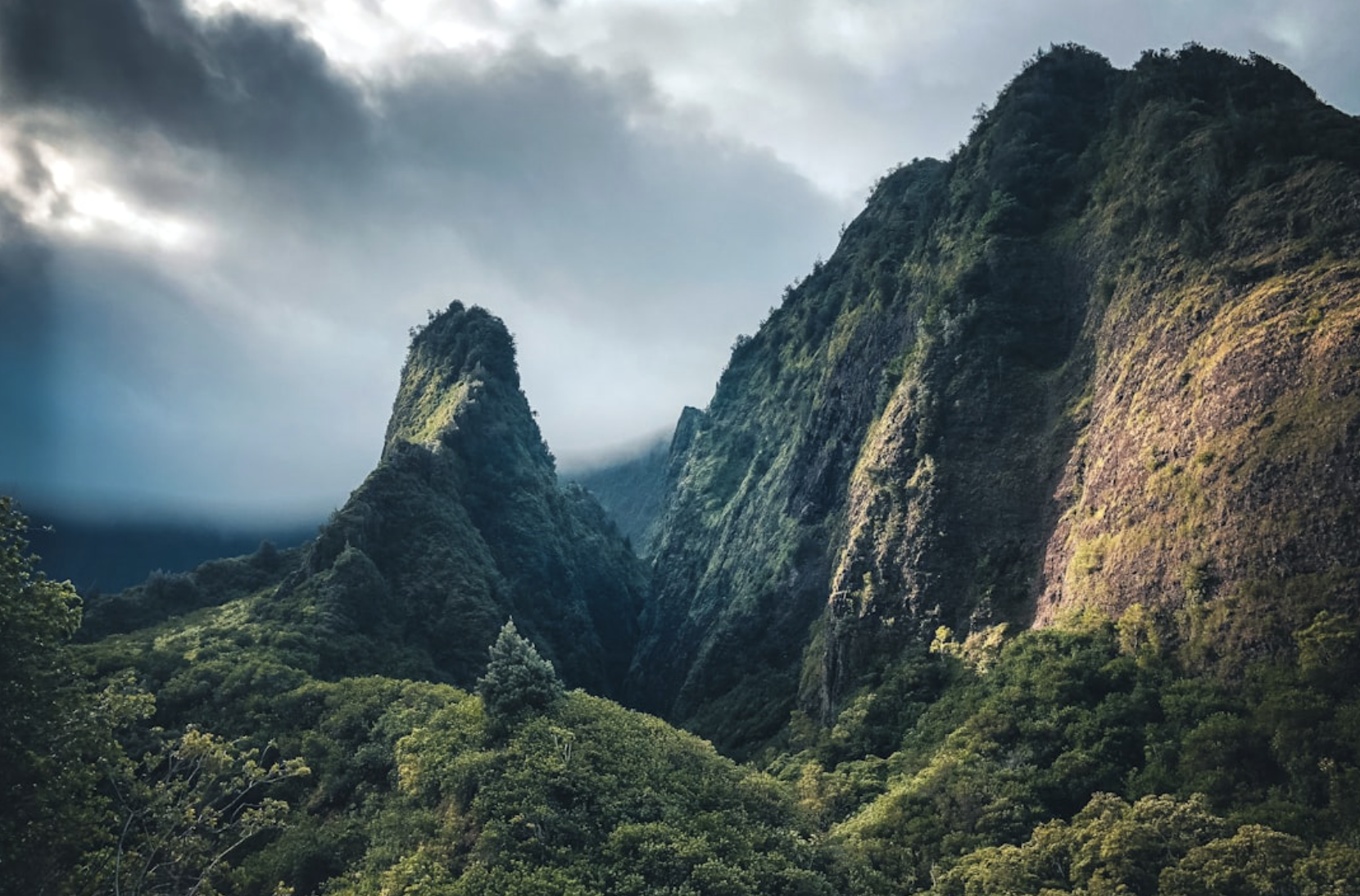
Wailuku is the oldest town on the island and the civic center of Maui County. If you’ve been here for more than a vacation, you’ve probably driven Main Street past the Iao Theater, stopped at a coffee shop downtown, or hiked into Iao Valley State Park, where the lush West Maui Mountains dominate the sky.
What’s interesting about Wailuku right now is the momentum. Downtown has been quietly revitalizing for years — new restaurants, a brewery, First Friday street parties, and a growing group of younger families who found affordable character homes in the historic neighborhoods and put down roots.
Wailuku neighborhoods to know
• Historic Wailuku / Happy Valley — older plantation cottages and bungalows, many walkable to downtown. Character homes that can be gems with the right renovation.
• Wailuku Heights — established hillside residential neighborhood with ocean and valley views. A local-favorite family area.
• Kehalani — newer master-planned community on the Waikapu/Wailuku border, with modern single-family homes and townhomes. Strong schools and infrastructure.
• Waikapu / Waikapu Country Town — even newer planned community, with a mix of homes at different price points and good long-term growth potential.
• Waihee — further up the coast, more rural, with ocean access and a friendlier price point than most of the island.
Who thrives in Wailuku: Families who want strong neighborhoods without resort prices, first-time Maui buyers looking for equity, and people who value the civic/cultural richness of the county seat. Buyers fixing up a historic cottage in Happy Valley are getting some of the best character-home value on the island.
Kahului: practical, affordable, central to everything
Kahului is Maui’s infrastructure hub. The airport is here. Maui Memorial Medical Center. Costco, Target, Home Depot, Walmart, and the island’s two major shopping centers (Maui Mall and Queen Ka’ahumanu Center). It’s also home to some of the most affordable entry-level single-family neighborhoods on Maui — which is exactly why so many local families start their homeownership journey here.
Kahului neighborhoods to know
• Dream City — classic post-war neighborhood with small-lot homes on walkable streets. Consistently the most approachable entry point for first-time buyers.
• Maui Lani — a planned community with newer construction, a golf course, and family-oriented amenities. Nicer homes, higher price point, but still competitive for Central Maui.
• Papa Avenue / Keolani Place area — established residential streets with solid family homes and decent yards.
• Kanaha / Old Kahului — closer to the coast, a quieter pocket with beach access to Kanaha Beach Park (kitesurfing and windsurfing, plus the bird sanctuary).
Who thrives in Kahului: Working families who need proximity to jobs and infrastructure, first-time buyers who want the most house per dollar, long-term rental investors who appreciate steady tenant demand near the airport and hospital, and retirees who want practical, flat-terrain living close to medical care.
Trade-off: you’re further from the beaches that Maui is famous for, and the neighborhoods are more utilitarian than the tourist-facing parts of the island. You’re buying for value and practicality, and on both counts, Central Maui delivers.
Waikapu & Maui Meadows of Central: the growth corridor
The stretch between Wailuku and Kihei — think Waikapu, Maui Tropical Plantation, and the newer developments pushing south — is one of the most active growth areas on the island. If you’re looking at a ten- or twenty-year horizon, these neighborhoods are worth paying attention to. Newer construction, better infrastructure, and family-oriented planning are all pushing values up steadily.
Central Maui lifestyle at a glance
• Beaches: Kanaha Beach Park (kitesurf, windsurf, big shade trees, family-friendly), Waihee Beach Park, easy drive to Baldwin Beach and the North Shore
• Schools: Baldwin High School (Wailuku), Maui High School (Kahului), Iao Intermediate, plus strong public elementary options. For charter/private, Maui Prep (West) and Seabury Hall (Upcountry) are within commute range.
• Medical: Maui Memorial Medical Center is the island’s main hospital — a significant amenity if you’re thinking about long-term residence or retirement
• Shopping: Target, Costco, Home Depot, Safeway, Foodland, Queen Ka’ahumanu Center, Maui Mall
• Dining: Growing downtown Wailuku scene (Maui Brewing’s Wailuku location, Sixteen Ohana, Tiffany’s, Cafe Marc Aurel), plus Kahului local favorites (Tin Roof, Da Kitchen, Giannotto’s)
• Culture: Iao Valley State Park, Bailey House Museum, Maui Arts & Cultural Center, Maui Nui Botanical Gardens, First Friday Wailuku
• Commute: Everything is already here — you’re 5–15 minutes from the airport, the hospital, and the major shopping; 20–30 minutes to Kihei; 25 minutes to Paia; 30 minutes to Makawao
Central Maui market snapshot (general ranges — ask for current numbers)
• Kahului single-family homes: roughly $850K–$1.4M for standard 3-bed/2-bath in established neighborhoods
• Wailuku homes: $900K–$1.8M across Happy Valley, Wailuku Heights, Kehalani, and Waihee
• Waikapu / Kehalani newer construction: $1.1M–$2M for family homes in the planned subdivisions
• Wailuku Heights ocean-view homes: $1.5M–$2.5M+ depending on view and condition
• Townhomes & condos (Kahului, Kehalani): $600K–$1M, the most attainable ownership on the island
Why Central Maui is the smart buyer’s market
Here’s what I tell every client who’s debating Central Maui against the coast:
If you’re a primary-residence buyer on a Maui income or a retiree on a fixed budget, Central Maui is the market that actually lets homeownership work. You’ll get two or three times the square footage of a coastal condo at the same price, you’ll be closer to everything practical, and you’ll be in neighborhoods with real families and real community — not vacation turnover.
If you’re an investor, Central Maui long-term rentals have steady demand, driven by hospital workers, airport employees, teachers, and the service-industry workforce that keeps the island running. The yields look different than short-term vacation rentals, but they’re more stable and less exposed to zoning risk.
If you’re moving to Maui and haven’t picked a side yet, Central Maui is a smart starting point because it connects you to every other part of the island in under 30 minutes — you can live here while you figure out whether you’re actually a South Side, North Shore, or Upcountry person.
Thinking about Wailuku, Kahului, or Waikapu? Let’s talk about what you need and I’ll tell you what’s realistic.
📩 Email me at angieow@icloud.com
📱 Text or call (808)419-1982
🌐 Or send me a message through the contact form
This article is general information, not legal, tax, or financial advice. For your specific situation, please consult a licensed attorney, CPA, or financial advisor — I’m happy to make introductions to Maui professionals I work with.
Angie Olmedo Williams is a licensed Realtor® with Coldwell Banker Island Properties, serving buyers and sellers across Maui with a focus on Kihei, Wailea, Makena, Upcountry, and the North Shore.
